

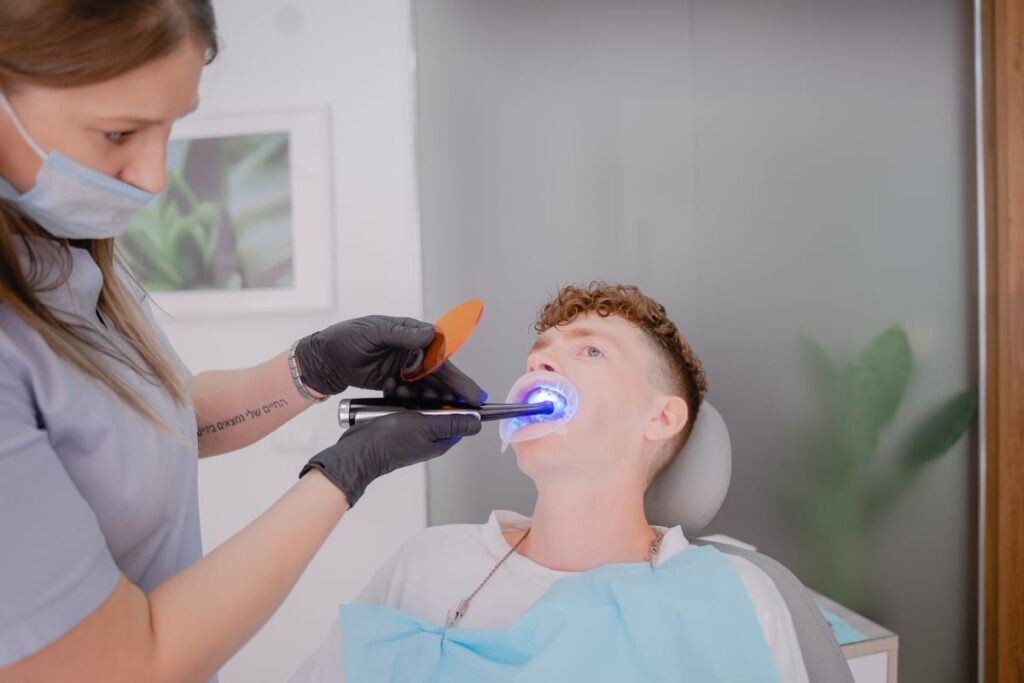
If you’ve ever asked yourself, “Why do my teeth hurt after whitening?” — you’re not alone. Sensitivity after whitening is one of the most common concerns we hear at Hill Family Dental Columbia. The good news? It’s usually temporary and very manageable. Dr. Reid Hill and our team in Columbia, TN have expert solutions to help you whiten comfortably and confidently.
Why Do Teeth Hurt After Whitening? The Science Explained
Tooth sensitivity after whitening happens for a clear scientific reason. Whitening agents — typically hydrogen peroxide or carbamide peroxide — penetrate the outer enamel layer. This opens tiny channels called dentinal tubules that lead directly to the nerve.
When these tubules are exposed, temperature changes and air movement trigger sharp, brief pain. Think of it as your nerve briefly feeling everything more intensely. This is not damage — it’s a predictable response to the whitening process.
The concentration of the whitening agent also matters. Higher concentrations whiten faster but increase sensitivity risk. Professional treatments are carefully dosed to balance results with comfort.
Common Causes of Post-Whitening Sensitivity in Columbia Patients
Several factors make some people more sensitive than others after whitening. Understanding your risk factors helps Dr. Hill customize your treatment plan.
Here are the most common contributors to whitening sensitivity:
- Thin enamel: Less protective enamel means the nerve is closer to the surface.
- Existing sensitivity: Patients with naturally sensitive teeth feel more post-whitening discomfort.
- Gum recession: Exposed root surfaces have no enamel and react strongly to whitening agents.
- Overuse of whitening products: Using strips or trays too frequently irritates the nerve over time.
- Acidic diet: Consuming coffee, citrus, or soda softens enamel before treatments.
- Cracked teeth or cavities: These create direct pathways for the whitening agent to reach the nerve.
During your consultation at Hill Family Dental Columbia, Dr. Hill reviews your dental history. This helps identify any sensitivity risk factors before treatment begins. Addressing these concerns first leads to a much more comfortable whitening experience.
How Dr. Reid Hill Minimizes Whitening Sensitivity
Professional whitening at Hill Family Dental Columbia is designed with your comfort in mind. Dr. Hill uses evidence-based techniques to reduce sensitivity at every step. Patients in Columbia, TN consistently report better experiences with in-office whitening versus store-bought alternatives.
Here’s what our team does to protect you during treatment:
- Pre-treatment fluoride: Applying fluoride before whitening strengthens enamel and reduces nerve reactivity.
- Desensitizing gel: Potassium nitrate gels calm the nerve before and after the procedure.
- Customized tray fit: Ill-fitting trays expose gum tissue to bleaching agents, causing unnecessary irritation.
- Controlled bleaching concentration: Dr. Hill selects the right peroxide strength for your enamel condition.
- Timed application: Shorter application sessions reduce cumulative nerve exposure.
These steps make a measurable difference in patient comfort. You shouldn’t have to suffer through sensitivity to achieve a brighter smile. Dr. Hill’s approach proves that both are possible at the same time.
What You Can Do at Home to Relieve Whitening Sensitivity
Even with professional care, some mild sensitivity can linger for 24 to 48 hours. The right at-home habits speed up recovery and reduce discomfort significantly. Here are the most effective strategies our Columbia patients use.
Use a sensitivity toothpaste. Products containing potassium nitrate or stannous fluoride block dentinal tubules. Brush with it twice daily starting two weeks before your whitening appointment. Continue using it for at least one week after treatment.
Avoid extreme temperatures. Hot coffee, ice water, and cold air can trigger sharp sensitivity spikes after whitening. Stick to room-temperature foods and beverages for 48 hours post-treatment. This simple step dramatically reduces discomfort during recovery.
Skip acidic foods temporarily. Citrus fruits, vinegar-based dressings, and sodas weaken enamel. Avoid these for at least 24 hours after whitening to protect your teeth. A softer, neutral-temperature diet helps your enamel recover faster.
Take over-the-counter pain relief if needed. Ibuprofen or acetaminophen can ease mild post-whitening discomfort. Always follow the dosing instructions on the label. If pain is severe or lasts more than three days, contact our office right away.
When to Call Dr. Reid Hill About Whitening Pain
Most whitening sensitivity resolves within 48 hours without any intervention. However, certain symptoms signal that something more serious may be happening. Knowing when to seek professional help protects your long-term oral health.
Contact Hill Family Dental Columbia if you experience any of the following:
- Pain that lasts longer than three days after treatment
- Sharp, stabbing pain that doesn’t subside between exposures
- Gum irritation, blistering, or white patches near the treated area
- Increased sensitivity that worsens rather than improves over time
These signs may indicate a cracked tooth, cavity, or nerve issue that whitening has aggravated. Dr. Hill can evaluate your teeth quickly and recommend the right course of action. Early intervention always leads to better outcomes.
Brighter Smiles Are Possible — Even With Sensitive Teeth
Many patients in Columbia, TN assume sensitivity means they can’t whiten their teeth. That’s simply not true. With the right professional approach, even patients with sensitive teeth can achieve beautiful, bright results safely.
Dr. Reid Hill has helped hundreds of Columbia residents smile more confidently. He tailors every whitening treatment to the individual’s enamel strength, sensitivity level, and goals. You deserve a whiter smile without the pain — and our team is here to make that happen.
Ready to whiten without the worry? Book Now to schedule your appointment with our team.
Frequently Asked Questions
Is it normal for teeth to hurt after whitening?
Yes, mild sensitivity after whitening is completely normal. The whitening agents temporarily open tiny channels in your enamel that expose the nerve. This sensitivity usually fades within 24 to 48 hours after treatment.
How long does whitening sensitivity last?
For most patients, sensitivity resolves within one to two days. In some cases, it can linger up to 72 hours. If discomfort extends beyond three days, contact Hill Family Dental Columbia so Dr. Hill can evaluate your teeth.
Can I whiten my teeth if I already have sensitive teeth?
Yes, but it requires professional oversight. Dr. Reid Hill assesses your enamel condition before recommending any whitening protocol. Using desensitizing treatments and lower-concentration gels makes whitening safe and comfortable for sensitive patients.
What toothpaste is best for whitening sensitivity?
Toothpastes containing potassium nitrate or stannous fluoride work best for post-whitening sensitivity. Brands like Sensodyne Repair and Protect or Colgate Sensitive are commonly recommended. Start using one two weeks before your whitening appointment for the best results.
Does professional whitening hurt more than store-bought kits?
Professional whitening is actually designed to minimize sensitivity better than most over-the-counter kits. Dr. Hill controls the concentration, timing, and technique throughout the process. Store-bought kits often use ill-fitting trays and inconsistent formulas that increase sensitivity risk.