

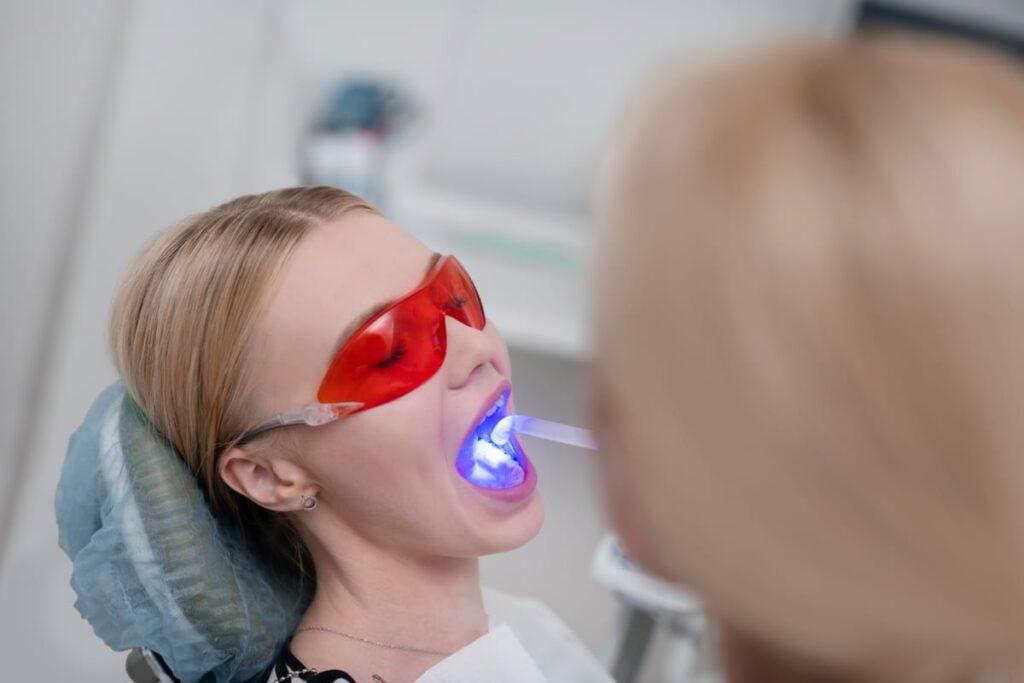
You bought the whitening strips. You tried the whitening toothpaste. You may have even done an at-home tray treatment. Yet your smile still looks dull or discolored. If you’ve been wondering why your teeth whitening isn’t working, intrinsic vs. extrinsic stains in Columbia could be the answer. Not all tooth discoloration responds to whitening the same way — and understanding the difference can save you time, money, and frustration.
What Are Extrinsic Stains and Why Do They Form?
Extrinsic stains live on the outer surface of your teeth. They sit in or on the enamel — the hard, protective layer you can see. These stains come from what you eat, drink, and expose your teeth to every day.
Common causes of extrinsic staining include:
- Coffee, tea, and red wine
- Dark berries and certain sauces like soy or tomato
- Tobacco use, including cigarettes and chewing tobacco
- Poor brushing habits that allow plaque and surface buildup
- Chromogenic bacteria that deposit pigment onto enamel
The good news? Extrinsic stains are generally the most treatable. Regular professional teeth cleanings remove surface buildup. Whitening treatments — both in-office and take-home — can effectively lift these surface stains. The key is consistent oral hygiene and professional care.
What Are Intrinsic Stains and Why Won’t They Bleach Away?
Intrinsic stains are a different story entirely. These stains live inside the tooth, deep within the dentin layer beneath the enamel. No amount of surface-level whitening gel can fully reach or reverse intrinsic discoloration.
Intrinsic stains can develop for several reasons:
- Tetracycline or other antibiotic use during childhood tooth development
- Excessive fluoride exposure during enamel formation, known as fluorosis
- Trauma or injury to a tooth that affects the inner pulp
- Aging, which naturally thins enamel and makes dentin show through
- Certain genetic conditions that affect tooth structure
- Root canal treatment, which can darken a tooth over time
This is why someone might complete multiple whitening treatments with minimal visible results. The stain simply isn’t on the surface. Over-the-counter products and even professional bleaching have real limits when it comes to deeply embedded discoloration. Knowing this distinction helps patients in Columbia avoid wasting effort on the wrong treatment.
How Dr. Reid Hill Identifies Your Stain Type
At Hill Family Dental Columbia, Dr. Reid Hill begins with a thorough examination before recommending any whitening approach. He assesses the color, depth, and pattern of your discoloration. This helps determine whether the staining is extrinsic, intrinsic, or a combination of both.
Some stains have a clear origin, like a single gray tooth after an old injury. Others are more subtle. Dr. Hill also reviews your dental history, medications, and lifestyle habits. This complete picture guides a treatment plan that actually fits your specific situation — not a one-size-fits-all approach.
Professional diagnosis is especially important for patients who have tried multiple whitening products with disappointing results. Rather than pushing forward with more of the same, the right step is to understand why the staining isn’t responding. That conversation starts with a visit to our Columbia office.
What Treatments Actually Work for Each Stain Type
Once the type of staining is identified, the path forward becomes much clearer. Extrinsic stains typically respond well to professional whitening. In-office treatments use stronger bleaching agents than anything available over the counter. Take-home trays custom-fitted by Dr. Hill deliver consistent results over a few weeks.
For intrinsic stains, the approach shifts away from bleaching entirely. Cosmetic Dentistry offers several effective alternatives that can dramatically improve your smile’s appearance. Two of the most popular options include:
Dental Veneers: Thin porcelain or composite shells bonded to the front surface of teeth. Veneers cover the stained tooth completely. They can be color-matched to surrounding teeth and deliver a natural, bright result even when whitening has failed.
Dental Crowns: For teeth with deeper structural damage alongside intrinsic staining, a crown may be the better solution. A crown covers the entire visible tooth. It restores both appearance and function at the same time.
In some cases, internal bleaching may be an option. This technique is used on teeth that have had root canal treatment. A dentist places a bleaching agent inside the tooth itself to lighten it from within. Not every patient is a candidate, but it can be effective for the right situation.
When Discoloration Could Signal Something More Serious
Most tooth discoloration is cosmetic and not a sign of a dental emergency. However, certain color changes can indicate a problem that needs prompt attention. A tooth that suddenly turns dark, gray, or brown after an injury may have suffered internal damage. The pulp inside the tooth may have died or become infected.
In these situations, cosmetic treatment alone is not enough. The underlying issue must be addressed first. If you’re experiencing pain, sensitivity, or swelling alongside tooth discoloration, that may be a sign you need Emergency Dentistry care right away. Dr. Hill and the Hill Family Dental Columbia team can assess what’s happening and determine the right course of action quickly.
Even without pain, a sudden unexplained color change in a single tooth warrants a dental evaluation. Don’t assume it’s purely cosmetic until a professional confirms that.
Realistic Expectations for Teeth Whitening in Columbia
Teeth whitening is one of the most popular cosmetic dental treatments for a reason — it works well when applied to the right type of staining. Setting realistic expectations from the start leads to better outcomes and less frustration. Patients with mild to moderate extrinsic staining often see dramatic improvements. Those with deep intrinsic staining may see little or no change from bleaching alone.
Your natural tooth color also plays a role. Some people simply have naturally darker or more yellow dentin beneath their enamel. Whitening can improve this, but it cannot change your tooth’s genetic baseline. That’s where cosmetic solutions like veneers become genuinely valuable — they redefine your smile rather than just lightening what exists.
The Columbia team at Hill Family Dental is committed to honest, patient-centered guidance. Dr. Hill will never recommend a treatment that won’t deliver real results for your specific type of discoloration. That commitment to education is what sets your experience apart from a quick product purchase at the drugstore.
Frequently Asked Questions
Why do whitening strips work for some people but not others?
Whitening strips contain peroxide-based bleaching agents that break down surface stains on enamel. They work well for extrinsic stains caused by food and drink. However, they cannot penetrate deeply enough to affect intrinsic stains inside the tooth. People with intrinsic discoloration often see little to no improvement from strips, which is why professional evaluation is so important before investing in whitening products.
Can veneers fix teeth that didn’t respond to whitening?
Yes — dental veneers are one of the most effective solutions for intrinsic staining that doesn’t respond to bleaching. Veneers are custom-crafted porcelain or composite shells that bond directly to the front surface of the tooth. They fully conceal discoloration and can be matched to any shade you prefer. Dr. Reid Hill at Hill Family Dental Columbia can help determine if veneers are right for your specific situation.
Is teeth whitening safe if I have sensitive teeth?
Many patients with sensitive teeth can still whiten safely with the right approach. Professional whitening treatments can be adjusted in strength and application time. Dr. Hill may recommend a desensitizing treatment before or after whitening. Over-the-counter products are harder to control and may cause more sensitivity. A consultation with our Columbia team is the best first step for sensitive-tooth patients.
How long does professional teeth whitening last compared to store-bought products?
Professional whitening typically delivers longer-lasting results because the bleaching agents are stronger and more evenly applied. In-office treatments can last one to three years with good oral hygiene. Store-bought strips and trays may fade within a few months. Avoiding staining foods and drinks and maintaining regular cleanings will help extend any whitening result, professional or otherwise.
What should I do if one tooth is noticeably darker than the rest?
A single dark tooth often points to intrinsic discoloration, sometimes caused by past trauma, a root canal, or internal pulp changes. This type of staining rarely responds to standard whitening. Dr. Reid Hill will examine the tooth to rule out any underlying structural or health concerns. Depending on what he finds, treatment options may include internal bleaching, a veneer, or a crown to restore an even, natural appearance. Book Now to schedule your appointment with our team.